

As I had the opportunity to write above, talent – and consequently its maximum and rarest manifestation, genius – belong almost exclusively to the arts and, more generally, to creative activities.
I would like to clarify this point better, so as not to give rise to misunderstandings: it is naturally in the lexicon and in common acceptance to define particular talents (and genius) even outside the sphere of the arts in the strict sense: we have great talents (and geniuses) in Science, Medicine, in Physics, Mathematics, Philosophy, practically in every sector of human knowledge. But this is not in contradiction to what has been said so far, because this definition refers to the eminently creative component of all these activities, not to their technical and executive dimension.
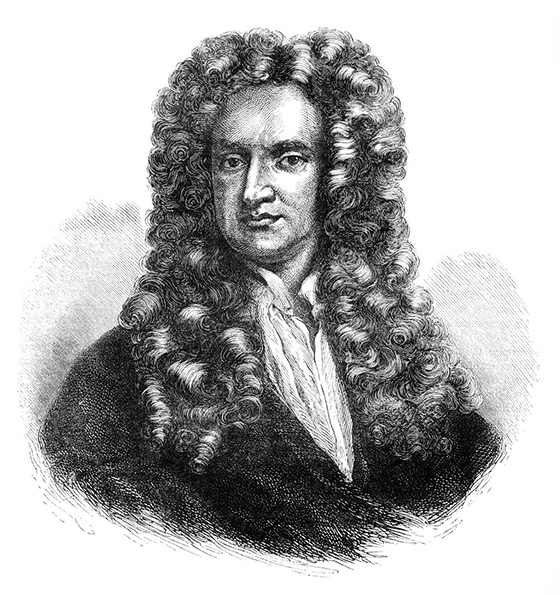
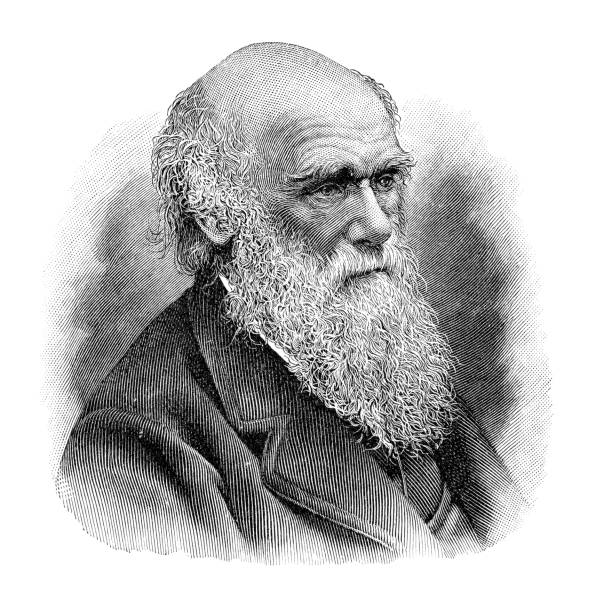
Sir Isaac Newton is considered a “genius” not for his (exceptional) ability to express concepts in mathematical form, but for the innovative, revolutionary – and therefore creative – vision in which he was able to combine these concepts to the point of radically reinvent modern physics. The same goes for Charles Darwin, who we do not consider a genius for his extraordinary ability to analyze the biological and environmental data that he collected over the years of sailing on the Beagle, but rather for the creativity with which he was able to use these data to support a theory that revolutionized not only the world of science, but the very vision of the world accepted up to that time.
In this sense the arts can be considered simply as privileged manifestations of this same creativity, and we deal with them here more directly only because the focus of these conversations is centered on this particular perspective, animation as an art form.
Therefore, due to this very close, tangled, intimate bond between “talent” and artistic expression in general, it has truly always been the worry, the burden, the blessing-and-curse that every artist, from the most humble to the most recognized, from the most modest to the greatest, he finds himself having to carry it on his shoulders for his entire life, due to the very fact of practicing an artistic profession.
It is no coincidence that I spoke of “burden”, because the field must immediately be cleared away from an often poorly posed question: even the most gifted, even those who are among the few “chosen” in the Olympus of excellence, and even among those who we define “geniuses”, the artist will always feel the burden of this gift weighing on him, first of all because he perceives it for what it is, that is, innate, and therefore only very partially controllable and manageable by his rational conscience, and then, because he knows very well that there are NO limits to excellence, and that it takes constant, tireless effort to live up to one’s talent: talent, authentic talent, is a voracious and insatiable beast. And the more so the more vigorous the talent itself is.
This applies in the same way and intensity to every artist, from the mediocre, to the most gifted, up to the Empyrean of Maximum Excellence. Because, keep this in mind, it is an entirely internal struggle. It should not be confused with the competition and the comparison of our abilities, of our goals, with those of others: it is instead a question of the conflict between our real abilities and the goals and objectives that our talent sets us. Which, if authentic, are always a step or two, or even more, ahead of our current capabilities.
This, if we look closely, although we may perceive it as a burden, is actually the real fuel that powers the engine of our creativity to develop, to overcome itself, to perfect itself, to achieve ever greater results. The moment this flame was missing, or when we felt “satisfied” with what we are and are able to achieve, the “propulsive drive” would be extinguished, and with it our creativity.
However, the confusion between ambition, skill and talent can be an insidious trap, for all of us, but in particular for the younger artists: the moment we feel “inadequate” compared to others who we recognise as more brilliant than us, or, worse, on the contrary, when we felt too fulfilled and satisfied with our work, or too high to compete, we would risk losing this driving force, which is essential for growing and stabilising our position on the market. Or, in the case of more fragile, inexperienced and insecure personalities, regardless of their talent or objective abilities, they risk becoming discouraged, to the point of prejudicially giving up on possible results that would have been fully within their reach. In my career I have seen more than one artist, even a promising and valuable one, give up the battle due to this sense of inadequacy, often in the face of exaggerated requests, or due to little faith in themselves and in their own value, and give up preventively, sometimes even definitively, to any comparison, and to a possible career.
In this regard I would like to recall a book, a purely narrative and fictional novel, which however is truly very emblematic for revealing how harmful and even destructive these dynamics can be, and how much they can affect the very life of who do not know how to recognise their real extent within the psychological and mental balance.
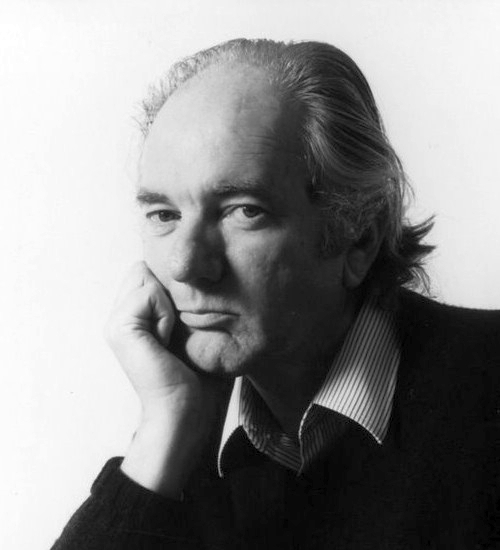
This is the short novel by the Austrian writer Thomas Bernhardt (1931-1989) entitled “The Loser” (Der Untergeher – 1983).
The book tells of the imaginary (but not too much) meeting between three artists in their youth and training phase. Two of them, the narrator – never called by his name – and his friend Wertheimer, are fictional. The third, however, is a real historical figure, the legendary virtuoso pianist and Canadian musician Glenn Gould(1932-1982).
The story begins when the narrator and his friend, both young pianists already trained and gifted with an extraordinary talent, decide to participate (at the Mozarteum in Salzburg, a very emblematic place in itself) in a masterclass held by one of the greatest and most esteemed pianists of the time, who also really existed, the Russian naturalised American Vladimir Horowitz (1903-1989).
The course (plausible but imaginary) takes place in the year 1953, the date in which Horowitz is in his 50s, while Gould is 21, as we can imagine the two “fictitious” co-protagonists are.
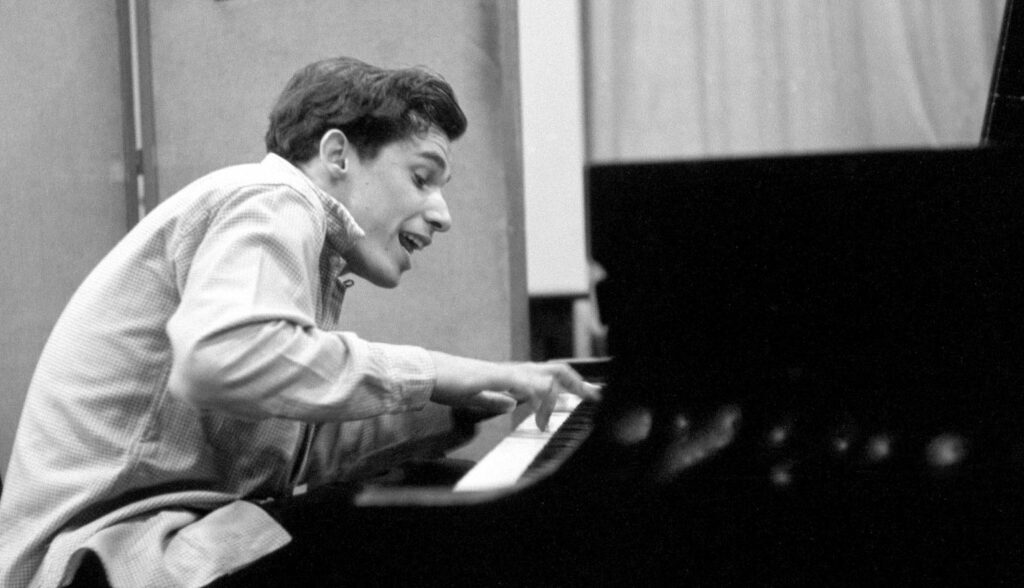
The character of the “narrator”, as I was saying, is a pianist who has already reached a level that we could define as excellence (otherwise he certainly would not have access to such a prestigious seminar) and who turns out to have come to reasonably aspire to a successful musical career; all this coming from a rather wealthy family, and driven first and foremost by personal ambition and the urgency of freeing himself from a grayly bourgeois environment. In his musical practice, technical ability and virtuosity (the “skill”, as we have said) have more space than actual talent.
His friend and colleague Wertheimer (a name that is also somewhat evocative: by pure coincidence, the same surname as one of the fathers of the Gestalt psychological theory, of which “our” Michotte was one of the important exponents) however, demonstrates a genuine talent and appears to have already started a concert practice of a certain level, although he too seems more focused on technical excellence and public recognition in itself rather than on a true and exclusive relationship with music as an art form.
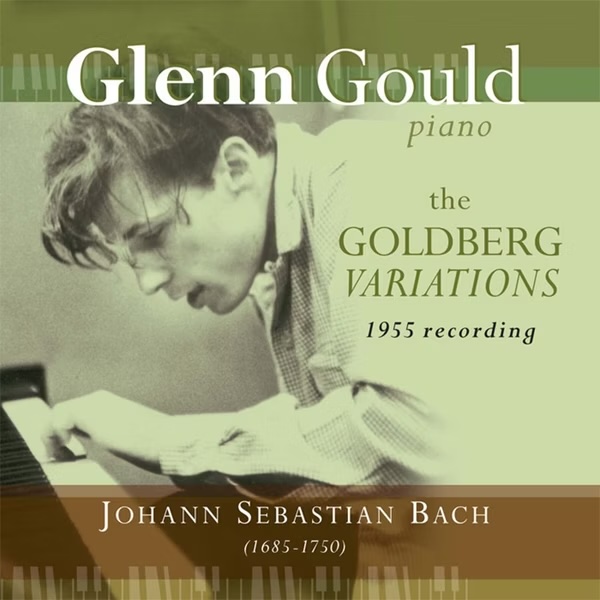
Having arrived in Salzburg (which the narrator says he “hates”) the two pianists find themselves witnessing, by chance, the performance by the young Glenn Gould of one of the most profound, complex and mysterious scores in the entire history of music, the very famous (also thanks to Gould himself) Goldberg-Variationen (BWV 988 – 1741) by Johann Sebastian Bach.
Both artists are sensitive and prepared enough to receive such a violent and devastating impression that they suddenly and forever see the course of their lives change, and not just their artistic and musical life.
Both cannot help but recognize that they are faced not with a simple execution, but with a truly exceptional event, one of those very rare cases in which someone, as a “mortal” human being, has the adventure of witnessing the primary explosion of an authentic genius, and, what is even rarer, being in possession of the tools to fully recognize the greatness and exceptional nature of the event itself.
The two react differently from each other, but both are so overwhelmed by the expression of that genius that they have to admit that they cannot even remotely sustain the comparison, and both abruptly end their careers and abandon the field of musical performance.
In the historical story of Salieri, which I had mentioned in the previous conversation, it is very unlikely that the worthy musician, already in full career and esteemed internationally, was truly able to fully evaluate Mozart’s genius, so much so as to engineer his death, as legend claims (and Milos Foreman’s movie “Amadeus”). However in this case the two young pianists had both fully understood the dimension of the phenomenon they were facing.
The first of the two, the narrator, simply decides to sell (or rather, practically to sell off) his precious and beloved Steinway piano and to dedicate himself to an unspecified activity in the philosophical field, while maintaining contact with his “past life” through the painful and ultimately unsuccessful attempt to write a historical-critical essay on the figure of his model and demon, Glenn Gould. Who by the way will die prematurely from a stroke as soon as he reaches the age of 50.
Even Wertheimer, for his part abandons musical activity, but, having music much more deeply rooted in the depths of his soul, and possessing his own marked talent, he does so with much more suffering and effort, and ends up dedicating himself without passion to some “humanistic” studies, also not better specified. In reality, he will never be able to overcome the trauma of that fateful encounter, which will corrode his spirit mental balance until, almost 30 years later, he takes his own life.
But it won’t be his own sense of inadequacy that will make him finally decide to come to terms with his own existence, but rather the devastating event of the premature, for him aesthetically and logically inexplicable, death of his mentor (it was Gould who nicknamed him “the loser”), demon and mirror.
I wanted to tell this story in summary, for those who don’t already know it, because I consider it very significant for better understanding these psychological dynamics to which all of us, due to the very nature of our work, are exposed.
For the particular benefit of younger artists, who are just starting to face this rigid and severe market, I would therefore summarize what has been said so far in some fundamental points, taking into account what concerns us more directly as (chraracter) animators:
A – Skill and Talent, as we have said and repeated, are not synonymous. Even if it is common to play on the ambiguity of these two terms, what companies and their HR are looking for with their recruitment announcements is not and could never be actual talent (and much less genius, of course) but much more simply skills and knowledge that can be recognized and evaluated, hopefully objectively. So don’t be discouraged when you read stellar recruitment notices that seem to require artists capable of painting the Sistine Chapel, those are childish ambitions without the possibility of being reflected in reality. All they ask for are the necessary and sufficient qualifications and skills to perform a precise and limited task. All you need to equip yourself with are the technical tools and skills to best perform these tasks. Whether you are endowed with talent in greater or lesser quantities is entirely up to you, which could, if anything, help you in acquiring these tools and exercising them to the fullest.
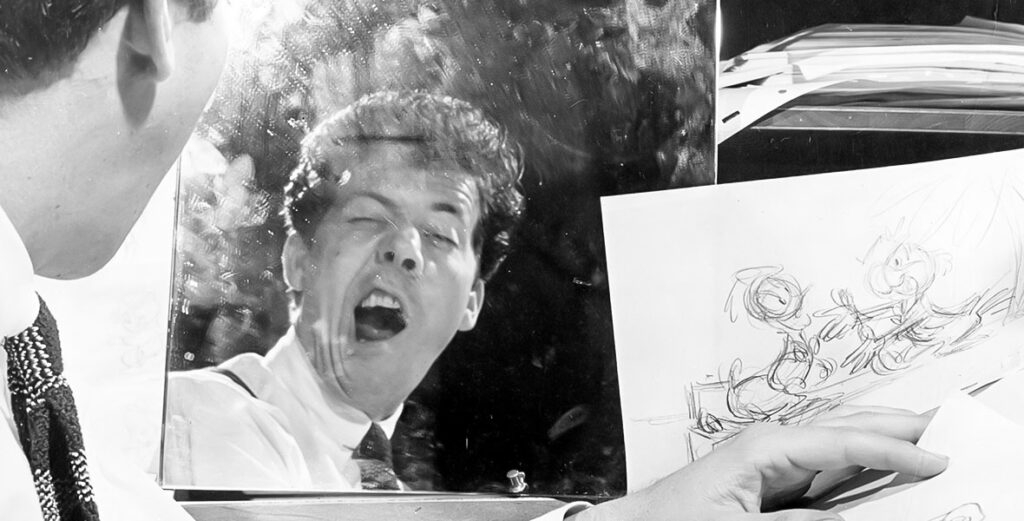
B – Even Talent and Genius – obviously – are not synonymous. And speaking of Genius, well, forget it: it is expressed by very few individuals in the world, and you could live an entire life without having the fortune of meeting even one of them, not only in our field, but in the whole world in general. I myself can say that I have met many talents, even great ones, in all disciplines, and the only one who I could say with good approximation of belonging to the category of “geniuses”, and who I had the fortune of knowing personally, was Umberto Eco (not even a very long and in-depth acquaintance, but which has profoundly marked my life in its own way, nevertheless). Another person who perhaps wasn’t a genius but certainly a brilliant artist, this time precisely in our sector, and with whom I was lucky enough to have a conversation of a certain level was the great Genoese illustrator and theater set designer Emanuele Luzzati. I then had the good fortune of meeting some other brilliant or highly prestigious people (not “absolute geniuses”, but certainly indisputably living “on another planet” compared to us mere mortals) such as Marc Davis, John Lasseter, Bruno Bozzetto, and in totally different fields I could still mention figures like Dario Fo, Franco Basaglia, Gillo Dorfles, and very, very few others. And this over the course of a life that is neither very short nor particularly sedentary.
So, don’t worry: you are not a genius, this world doesn’t really require geniuses – it can barely comprehend its existence, and in any case if you were, you would already know it (and you wouldn’t be here reading these poor little things of mine).
C – In any case, conversely, unless we are geniuses ourselves, which as we have seen is very unlikely, no matter how high our talent may be, we will always manage to find someone on our path who has more, or even much more talent compared to us. Put your heart at rest: this is inevitable.
These encounters are actually very interesting, but not always easy to manage. This mainly because we do not consider these people as aliens from “another planet”, but in some way we recognize them on the same level as us, and indeed we can have a natural conflictual reaction with them, considering the very high level of competition and challenge to the last blood that characterizes current work environments. Let us also add that usually these “talents” superior to us, precisely because they are also engaged in their hard battle for survival, are not particularly nice and well-mannered, unlike many geniuses or “quasi-geniuses”, who are usually so high level that they can almost always allow themselves to be affable, human, available in an almost touching way.
D – Symmetrically, we know that no matter how weak and uncertain our talent is, we will always meet someone who is in some way less gifted than us, this too is inevitable, and should reassure us a little bit. This is really part of life, it’s a bit like when we travel on a motorway: no matter how much we press down on the throttle, until we touch or even exceed the legal limits, we will always find someone who overtakes us because they are faster. And conversely, no matter how slowly we decide to proceed, we will always find someone to overtake, because he or she advances more slowly than us.
In reality, all this “traffic” at such different speeds does not reassure us at all, and those in particular who venture into the whirlwind of the current for the first times find themselves disoriented, intimidated, unable to control their pace, and at times could feel so overwhelmed by be tempted to abandon the trip.
If, however, we get out of the trap of “competitiveness”, which is only convenient for those who try to profit from our work, we realise how all this variety of vocations, skills and talents represents the greatest treasure at our disposal.
Contact and collaboration with people with talent and experience greater than ours is an invaluable stimulus for our growth, and all the more so the higher the difference in experience, ability, knowledge and talent that separates us from them.
BUT even meeting people with less experience and ability than us can be, and truly is, of great value, as long as we resist the sterile narcissistic temptation to console ourselves by extolling how much better we are compared to them.
You have no idea how much there is to learn, humanly, artistically and even technically, from someone who seems somehow further behind us in the queue. Moreover, helping an artist in difficulty, in addition to being good for one’s self-esteem as human beings, can be a great opportunity for ourselves to clarify processes that perhaps we now carry out a little mechanically, without thinking about it, even with a weakened enthusiasm. Personally, every time I found myself “teaching” something to someone (including these articles, even if they don’t have a real interlocutor in front of them) I found it like a gym, in which to exercise my tools, my thoughts, clarify and deepen certain issues, refresh my memory and also develop fresh new ideas.

And finally, let us always remember that animation, like cinema, is an eminently collective work: there are many people, many artists who are committed to a certain project, each with their own tasks to carry out, with their own goals and dreams, and with their own skills and ability. As in an orchestra, the individual instrument performs its part, but must at the same time be in perfect harmony with the entire collective of the team. The different skills, the different talents, all collaborate to achieve the goal, and it is perhaps precisely this collegiality, this unity of intent and results, one of the most precious assets that this profession, hard and wonderful, generous and ruthless, reserves for us.
So we have reached the end of this first part of articles, thoughts and reflections. In the next article we will try to “draw the threads” of the discussion held so far.
21 – Summarising, Concluding, so Far.